
 By
By 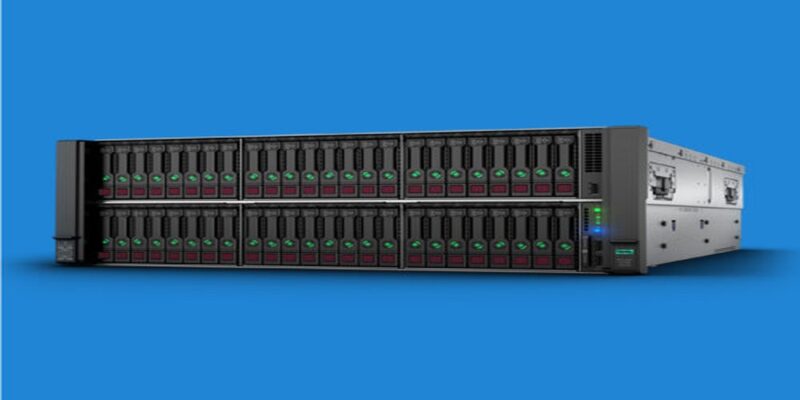
Enterprise-class servers such as the HPE ProLiant ML110 Gen11 are considered a popular choice for businesses that require stability, performance, and long-term value. This is especially true for small to medium-sized organizations that need a system capable of future expansion. Therefore, selecting the right specifications from the beginning is extremely important. This article will introduce 6 techniques for choosing this server model to ensure maximum cost efficiency and real-world usability.
1. Choose the CPU Based on Workload, Not the Most Powerful Option
When selecting a processor for the HPE ProLiant ML110 Gen11, it is important to analyze the actual workload rather than simply choosing the highest-performance CPU. The processor is one of the main cost drivers of the system, and over-specifying it can lead to unnecessary expenses without delivering meaningful real-world benefits.
For basic tasks such as file sharing, document management, or acting as a domain controller, an entry-level CPU is usually sufficient. However, for virtualization, database systems, or ERP applications with multiple concurrent users, a higher-core CPU is recommended to handle multitasking efficiently and prevent performance bottlenecks in the future.
2. Plan RAM According to System Growth
RAM directly affects server performance and system responsiveness. Insufficient memory can slow down operations, while excessive RAM may increase costs unnecessarily. A practical approach is to start with current requirements while leaving room for future expansion.
For example, if 16-32GB is sufficient today, it is advisable to choose a configuration that supports upgrades up to 64GB or more. This ensures that the system can scale alongside business growth without requiring a complete hardware replacement. The HPE ProLiant ML110 Gen11 offers flexible upgrade options, making it suitable for long-term planning.
3. Balance Storage Between Speed and Capacity
Storage plays a crucial role in both system performance and data reliability. For cost-sensitive deployments or general data storage, HDDs remain a practical option. However, for applications requiring high speed-such as databases or business-critical systems-SSDs or NVMe drives are strongly recommended to significantly reduce loading and response times. A hybrid approach is often ideal: using SSDs for the operating system and applications, while HDDs are used for bulk data storage. This combination provides both performance and cost efficiency.
4. Consider Scalability from the Beginning
One of the key advantages of the HPE ProLiant ML110 Gen11 is its strong scalability. Therefore, initial configuration should not be too restrictive. Choosing a “just enough” setup may limit future expansion as the business grows. Organizations may later need to increase users, expand databases, or add virtual machines. Selecting a system with available upgrade capacity-such as additional RAM slots, drive bays, or PCIe expansion slots-helps reduce long-term costs and avoids the need to replace the entire system when requirements increase.
5. Prioritize Management and Security Features
A server is not only about performance but also about manageability and security. The HPE ProLiant ML110 Gen11 includes HPE management tools that allow administrators to monitor system health in real time and receive alerts when issues occur, significantly reducing downtime.
Security features should also be considered, such as data encryption, user access control, and protection against unauthorized access. These capabilities are essential for safeguarding sensitive business data and ensuring operational continuity.
6. Choose a Reliable Provider with End-to-End Support
While hardware specifications are important, the service provider plays an equally critical role in overall value. Purchasing through an experienced vendor helps ensure that the selected configuration matches real business needs. It also reduces the risk of incorrect investment decisions, especially for organizations without a dedicated IT team. End-to-end support-from consultation and system design to installation and after-sales service-ensures that the server operates at maximum efficiency and maintains a longer lifecycle.
Choosing the right server is not only about considering the price, but also requires a comprehensive evaluation of key factors such as CPU, RAM, storage, system scalability, and reliable after-sales service. The HPE ProLiant ML110 Gen11 is therefore regarded as one of the most suitable options for modern organizations that require both flexibility and long-term value. With proper planning from the beginning, IT investment can be optimized for maximum efficiency and can sustainably support business growth in the long run.
In addition, Quickserv offers the HPE ProLiant ML110 Gen11 along with professional consultation to help customers choose the most appropriate configuration for their specific needs, whether for small, medium, or expanding enterprises. The company also provides a full range of IT solutions, including servers, UPS systems, networking equipment, and other IT products, delivering a complete one-stop service to ensure that all systems work together efficiently and reliably.








Comments