
 By
By 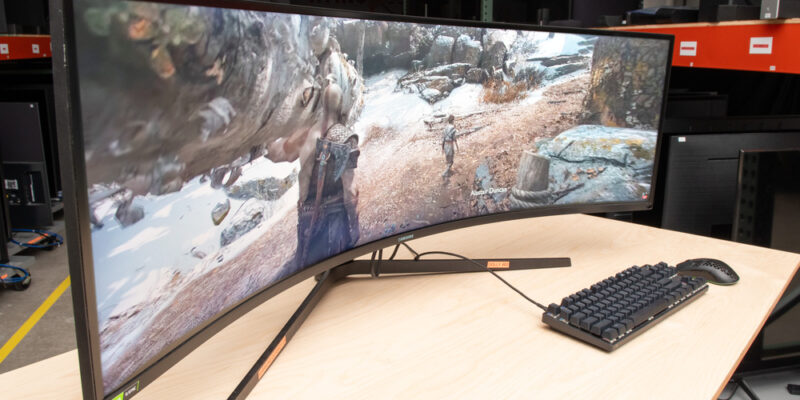
The best curved gaming monitor right now is the Alienware AW3423DWF for its stunning QD-OLED colors, or the Samsung Odyssey G9 for those who want maximum screen real estate. These monitors wrap your peripheral vision into the action and significantly reduce eye strain during long sessions.
Whether you are chasing 240Hz refresh rates for competitive shooters or want a gorgeous ultrawide for immersive RPGs, there is a curved monitor built for you. This guide cuts through the noise.
Why Choose a Curved Gaming Monitor?
The curve is not just aesthetic. There are real, measurable benefits:
- Immersion: A curved screen fills your field of view more naturally, pulling you into the game world.
- Reduced eye strain: Your eyes travel the same distance to every part of the screen, reducing fatigue.
- Better depth perception: The slight curvature creates a subtle 3D effect even in 2D games.
- Less distortion: Flat wide screens distort at the edges; curvature compensates for this.
The most common curvatures are 1000R (tightest, most immersive), 1500R, and 1800R (gentler, good for mixed use).
Top 5 Curved Gaming Monitors
| Monitor | Size | Resolution | Refresh Rate | Panel | Best For | Price (approx.) |
|---|---|---|---|---|---|---|
| Samsung Odyssey G9 | 49″ | 5120×1440 | 240Hz | VA | Ultimate immersion | $1,100 |
| LG 34GP83A-B | 34″ | 3440×1440 | 160Hz | IPS | Best all-rounder | $650 |
| AOC CQ32G3S | 32″ | 2560×1440 | 165Hz | VA | Budget pick | $280 |
| MSI MEG 342C | 34″ | 3440×1440 | 175Hz | QD-OLED | Premium visuals | $900 |
| Gigabyte G27QC | 27″ | 2560×1440 | 165Hz | VA | Entry-level | $200 |
What to Look for When Buying
Panel Type
- VA panels: Deep blacks, great contrast, ideal for dark games. Minor ghosting at very high speeds.
- IPS panels: Accurate colours, wide viewing angles. Better for competitive gaming.
- OLED/QD-OLED: Best picture quality money can buy, but watch for burn-in risk.
Refresh Rate & Response Time
- 144Hz is the sweet spot for most gamers.
- 240Hz+ makes a difference only in fast-paced competitive titles.
- Look for 1ms GtG response time to avoid ghosting.
Resolution & Size
- 27-inch: 1440p is perfect. 1080p looks soft at this size.
- 34-inch ultrawide: 3440×1440 (WQHD) is the standard.
- 49-inch super-ultrawide: 5120×1440 for the full panorama experience.
Budget vs Premium: Quick Comparison
| Category | Budget (Under $300) | Mid-Range ($300-$700) | Premium ($700+) |
|---|---|---|---|
| Best Pick | Gigabyte G27QC | LG 34GP83A-B | Samsung Odyssey G9 |
| Resolution | 1440p | 1440p Ultrawide | 1440p Super-Ultrawide |
| Refresh Rate | 165Hz | 160Hz | 240Hz |
| Panel | VA | IPS | VA / OLED |
Final Verdict
For most gamers, the LG 34GP83A-B hits the sweet spot of size, resolution, and price. If you want the most immersive setup money can buy and your GPU can handle it, the Samsung Odyssey G9 is in a league of its own.
Budget-conscious players will not regret the Gigabyte G27QC. It delivers smooth 165Hz gaming at 1440p without breaking the bank.
Check GPU compatibility before buying a super-ultrawide. You will need a powerful graphics card to drive 5K resolution at high frame rates.











Comments